
Sport Titles and the Working Value Question: What Modern Titles Actually Prove
One of the most common misreadings of a pedigree happens at the titles column. A buyer or novice breeder sees a string of letters after a dog's registered name and concludes that the dog has working value. That conclusion is sometimes right, sometimes partially right, and sometimes completely wrong. Modern sport titling has fragmented into a broad landscape of evaluations, some of which are serious tests of the traits a working breed needs, others of which are decorative. Reading a pedigree for real working content requires understanding which titles mean what — and that understanding is less common than it should be.
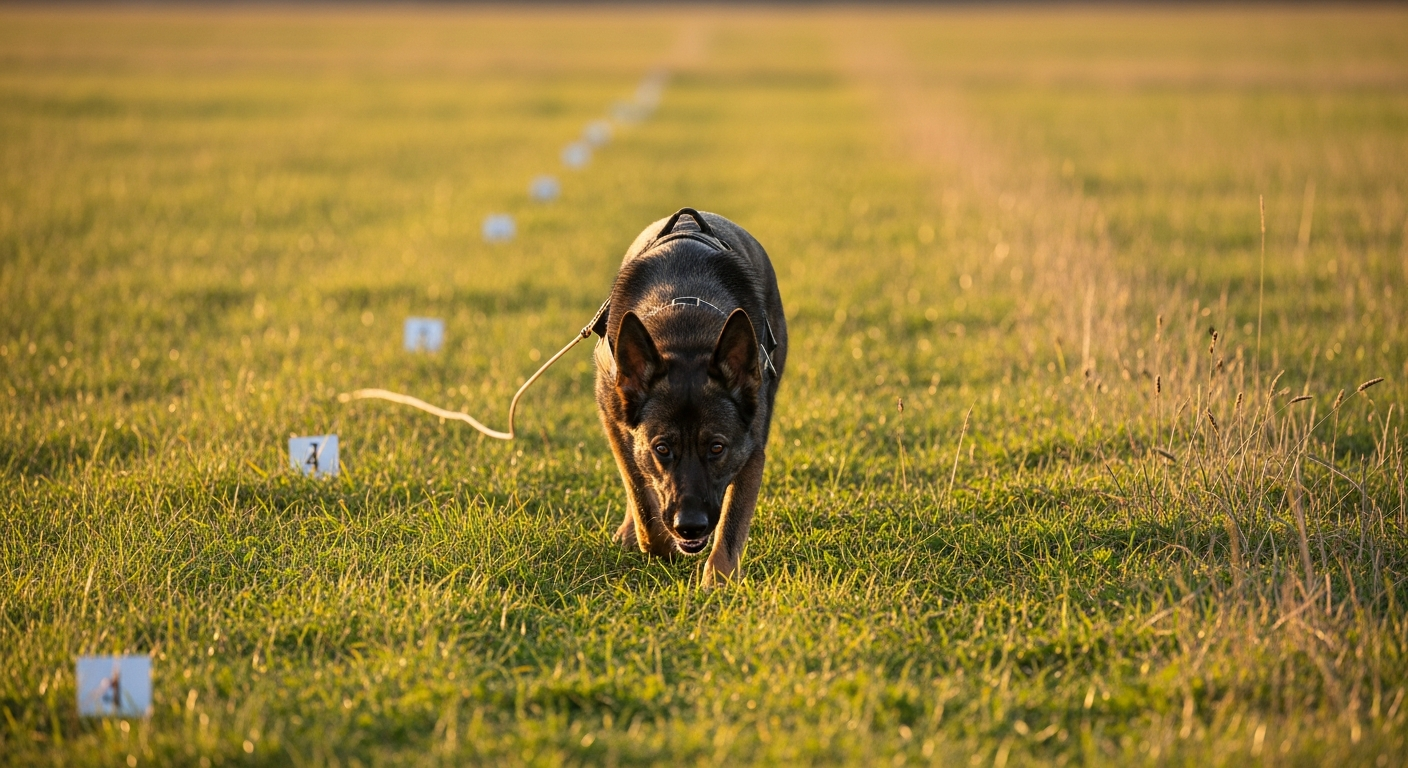
The Working Value Question
What does "working value" actually mean in this context? Specifically: does a title, or a combination of titles, increase the probability that a dog's offspring will carry the functional traits that define the breed — courage, trainability, structural soundness, drive appropriate to the work, nerve stability under pressure? Titles that meaningfully raise this probability carry genuine working value. Titles that do not, however prestigious or expensive to earn, do not.
The distinction is not about difficulty of achievement. Some extremely difficult titles test traits that do not predict working utility. Some relatively accessible titles are meaningful because they test exactly the gate trait the breed was selected for. Difficulty of achievement is only loosely correlated with working value.
Titles That Carry Strong Working Value
Working value is strongest in titles that require multiple traits to be demonstrated under pressure, with standardized evaluation and meaningful failure rates. The clearest examples:
| Title family | What it tests | Why it predicts breeding value |
|---|---|---|
| IGP / IPO (all levels) | Tracking, obedience, protection | Multi-trait test; requires nerve, drive, trainability; meaningful failure rate |
| Mondio Ring / French Ring | Scenario-based protection work | Tests decision-making and flexibility under novel pressure |
| KNPV / PH (Dutch protection sport) | Traditional protection scenarios | Deeply embedded in Dutch Shepherd / Malinois working genetics |
| FCI Working Trials (IFH tracking) | Scent work and tracking under judged conditions | Hunt drive, focus, trainability |
| Herding titles (HWT, HTAD, WTCH) | Actual livestock work with judge | Herding drive, biddability, breed-appropriate style |
| Sheep-working trials (ISDS, AKC/AHBA advanced) | Complex livestock management | Gold standard for Border Collie working value |
| Retrieving field trials (AKC Master, HRCH) | Complex retrieving under judged conditions | Core trait for retriever breeds |
| Earthwork trials (AKC/JE) | Quarry-based terrier work | Breed-appropriate drive and courage for terriers |
The common structural feature across these: the dog must perform multiple coordinated behaviors under pressure, evaluated against a standard that produces real pass/fail distinctions. A dog that earns an IGP3 has demonstrated the breed's functional phenotype in a way that a dog winning twenty conformation points has not.
IGP, IPO, SchH, ZTP, BH, AD, and FH are abbreviations readers meet constantly in working dog writing, and each letter carries meaning. IGP stands for Internationale Gebrauchshund Prüfung, an international working dog examination. IPO was its earlier name, and SchH, Schutzhund, means protection dog. ZTP is Zuchttauglichkeitsprüfung, a breeding suitability test. BH is Begleithund, companion dog. AD is Ausdauerprüfung, an endurance test. FH is Fährtenhund, a tracking dog title. A glossary and a timeline from 1972 onward help readers decode these terms.
Titles That Carry Modest Working Value
Some titles demonstrate specific traits but do not test the full breed phenotype. These contribute to working value but are not sufficient on their own:
- Obedience titles (AKC UDX, IPO-BH): tests trainability and handler focus; does not test courage, drive under pressure, or protection capability
- Rally titles: accessibility-friendly demonstration of trainability; not a gate for working breeds
- Agility titles: demonstrates athleticism and trainability; does not address breed-specific working traits
- Barn hunt, nose work: good for sport participation; modest working-predictor value for most breeds
- Dock diving: specific physical trait expression; minimal breeding-value signal for working breeds
Dogs with these titles are not worthless as breeding candidates — they may be excellent breeding candidates for other reasons — but the titles themselves do not substitute for the breed-specific gate tests that matter.
Titles That Carry Little Working Value
Some pedigree decoration is essentially that — pedigree decoration. Conformation championships, particularly in breeds where the show population has drifted substantially from the working population, often indicate little about working capacity. A bench championship tells us the dog has a structure that impresses conformation judges; it tells us nothing reliable about courage, nerve, drive, or the multi-trait integration required for real work. For breeds where show and working populations have diverged, as they have in many German Shepherd, Doberman, Rottweiler, and Belgian Malinois lines, show titles alone in a pedigree should prompt caution about working-value claims.
How to Read a Pedigree for Working Content
Given the variability in title meaning, how does a serious buyer or breeder read a pedigree? The framework I use:
- Count the gate tests. Look three generations back and count how many dogs hold working gate titles (IGP, KNPV, ring, advanced herding, advanced field trials, as appropriate for the breed). More is generally better.
- Track title completion, not just title entry. A dog that started IGP training but did not complete a title is a different signal from a dog that earned IGP3.
- Attend to the parent generation. The quality of the sire and dam weighs heavily. Strong working credentials in parents meaningfully raise the probability of breeding value in the offspring.
- Note the scoring, not just the title. A dog that barely passed is a different signal from a dog that scored well. Where scoring is available, extract it.
- Cross-reference the kennel. Kennels consistently producing working-titled offspring are different from kennels producing occasional working-titled dogs amid many untitled ones.
This framework will not produce certainty, but it produces calibrated probability. The pedigree analysis that combines title content, kennel track record, and generation-depth consistency is far more predictive of working value than any single datum.
The Gate Principle
The most useful concept in this whole evaluation is the gate principle. A gate test is an evaluation that separates dogs that can work from dogs that cannot, with a meaningful failure rate. Gate tests matter because they are the evolutionary mechanism through which working capacity is preserved in a breed over generations. Without gate tests in the breeding population, working traits drift away from the functional phenotype over time.
When I evaluate a breed's working standards, the first question I ask is whether the breed has functioning gate tests that affect who can breed. When the answer is yes — as in German breed surveys or IDC breeding requirements or the Rottweiler working title requirements — the working population generally retains functional phenotype. When the answer is no, working capacity erodes predictably within a few generations.
Understanding what titles your breed's ideal dog should carry, and why, is foundational to evaluating any pedigree with integrity. The working standard is not about title count. It is about which titles are in the pedigree and what they gate.