
Police Dog Breed Selection Standards: What Law Enforcement Actually Needs
Law enforcement agencies that rely on working dogs cannot afford sentimentality about breed standards. When a dog fails at work — when it refuses to search a building, shuts down in a crowd, or cannot be trusted in a high-stress apprehension — the consequences are operational, not cosmetic. The canine selection process in serious working dog programs functions as the most rigorous real-world test of what working breeds are actually supposed to be: a continuous, unforgiving evaluation that sorts functional animals from impressive-looking ones.
The selection criteria used by police agencies, military working dog programs, and specialist search-and-rescue organizations represent the breed standard as it would be written if function had always driven the process. Understanding what these programs look for — and why a large proportion of dogs from registries nominally dedicated to working breeds fail to qualify — illuminates everything wrong with how most breed clubs currently manage the breeds they claim to preserve.
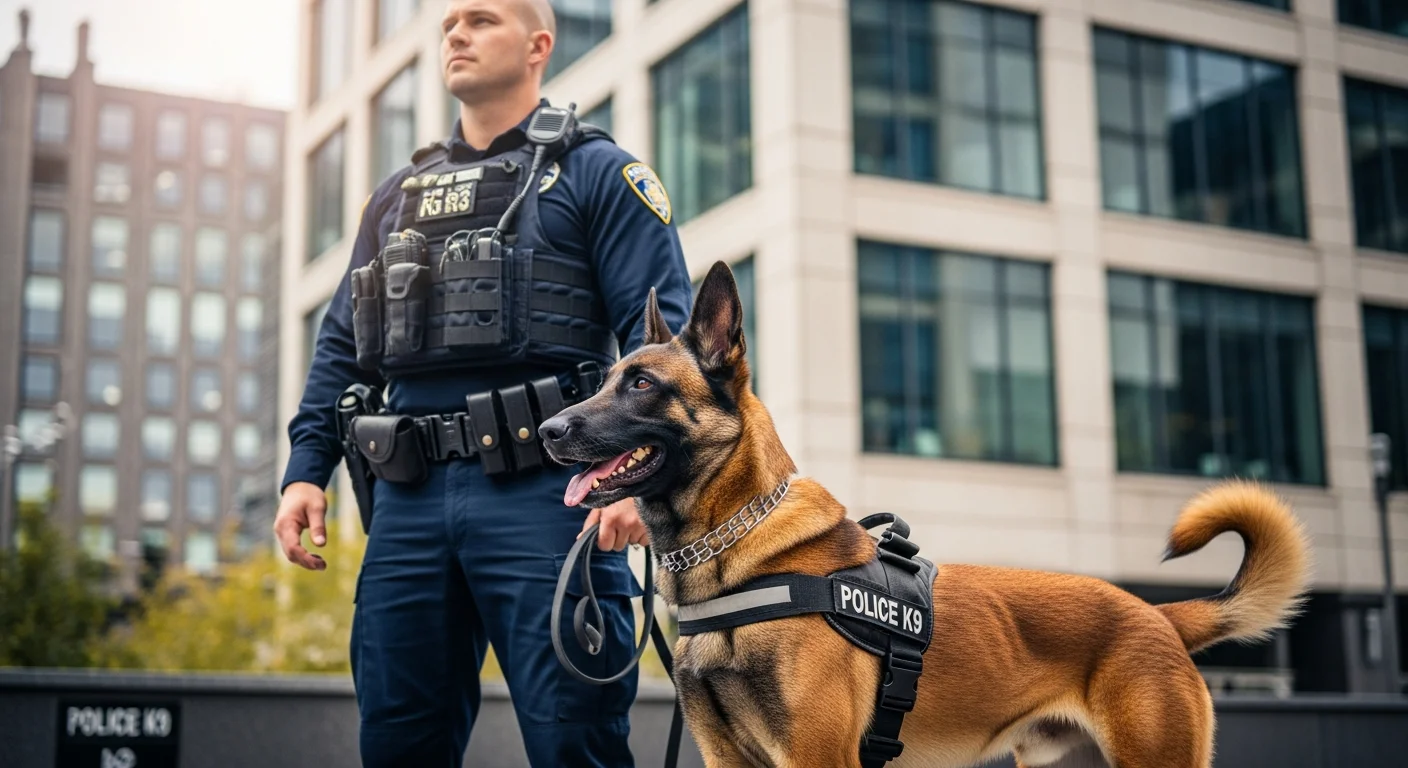
The Candidate Evaluation Process
Working dog programs acquire candidates through several channels: purpose-bred litters from established working line programs, import from European working dog suppliers, and evaluation of dogs submitted by breeders or individual handlers. Regardless of source, every candidate goes through a structured selection evaluation before being accepted for training. The evaluation does not award points for pedigree, registration, or the number of champions in the dog's ancestry. It evaluates behavior under the conditions the dog will actually face.
A typical initial selection assessment includes: prey drive evaluation using a rag or bite sleeve, environmental stability testing in novel or stressful settings, social confidence in crowds and on varied surfaces, ball or food drive assessment, recovery time after stress, handler focus and social engagement, physical examination including dental health, hip movement under load, and structural assessment for the specific demands of the work. Dogs that pass initial screening advance to more demanding evaluations. Dogs that fail at any point are returned to their handlers. The process is efficient and unsentimental.
The failure rate at initial screening is informative. Program managers who have tracked their acquisition data consistently report that dogs sourced from show-line breeding programs fail at substantially higher rates than dogs sourced from working-line programs with established performance requirements. This is not a statistical artifact or a prejudice against conformation-bred dogs. It is the measurable consequence of breeding populations without working title requirements: when working capacity is not selected for, it declines.
Drive Assessment: Why It Matters
Drive — in the working dog context — refers to the intensity and persistence of motivational states that underlie working behavior. Prey drive manifests as the intense pursuit of moving objects and underlies the biting, gripping, and engagement behavior used in protection and apprehension work. Hunt drive underlies the persistence needed for prolonged searching tasks. Pack drive underlies the social engagement with a handler that makes training possible. Defense drive underlies the dog's response to perceived threats against itself or its handler.
These drives are heritable. They vary in intensity between individuals and between breeding lines. A dog with insufficient prey drive cannot be trained for reliable bite work, regardless of the sophistication of the training method. A dog with insufficient hunt drive cannot be trained for prolonged search tasks. The drives must exist in the genetics before training can develop them. This is why working dog programs cannot simply take well-structured, healthy, compliant dogs from any available source and train them into capable police dogs. The raw material must already contain what training will develop.
Show breeding has systematically reduced drive intensity in most working breeds that have split into show and working populations. The reason is logical: high-drive dogs are difficult to manage as household companions, require extensive outlets, and sometimes behave in ways that concern inexperienced owners. Selecting against extreme drive over many generations produces dogs that are easier to live with but progressively less suited to working demands. The working versus show line divide in German Shepherds is partly a story about differential drive selection across two populations with different working requirements.
Environmental Stability and Nerve
Police dogs work in environments that would stress most pet dogs severely: crowds, gunfire, smoke, confined spaces, elevated platforms, moving vehicles, variable surface conditions, and constant novel stimuli. Environmental stability — the capacity to maintain normal behavioral function in stressful, novel, or threatening environments — is not trainable in the absence of a genetic foundation. It can be developed and refined through systematic habituation, but it cannot be created from nothing.
Nerve strength, in working dog terminology, refers to the dog's capacity to process stress without functional degradation. A dog with strong nerves can experience high-intensity stimulation — noise, physical pressure, confrontational behavior — and remain goal-directed and operational. A dog with weak nerves may show initial engagement but shuts down when stress levels rise, becoming unavailable for work precisely when it is most needed.
Nerve strength is heritable, and it is evaluated in every serious working title system. The courage test in IGP, the civil work in French Ring, the pressure scenarios in KNPV — all are designed to distinguish dogs with genuine nerve strength from dogs that perform adequately in training environments but cannot maintain performance under real operational pressure. Police programs run their own nerve evaluations because they cannot afford to discover functional limitations after the dog has been accepted into training.
Breed Preferences in Operational Programs
The breeds most commonly found in professional working dog programs are not selected for aesthetic reasons. Belgian Malinois have become dominant in many military and elite law enforcement programs because the working Malinois population — particularly the KNPV-bred Belgian dogs — has maintained the drive intensity, nerve strength, and physical capability required for demanding operational work. The Dutch Shepherd occupies a similar position in programs that evaluate both breeds. German Shepherds from working lines remain common, particularly in European police programs, where the SV system's maintenance of IGP requirements has kept working-capable genetics in the breeding population.
The breeds notable by their absence from professional programs tell an equally important story. AKC show-line German Shepherds are rarely seen in elite working dog programs. American-bred Rottweilers and Dobermans are unusual in professional working contexts. English-bred Golden Retrievers and Labradors appear in detection roles — where drive expression is channeled into search rather than apprehension — but rarely in dual-purpose or tactical roles. The pattern reflects what decades of selection pressure, or its absence, has produced in different populations.
"We can train a dog to do many things. We cannot train a dog to want to. Drive has to be there. The dog has to be built for this work, genetically. If it isn't, all the training in the world just teaches a soft dog to imitate a working dog until the pressure gets real."
Health Expectations in Working Programs
Working dog programs have direct operational stakes in the health of their animals. A police dog that develops hip dysplasia at four years of age has a compromised working career and represents a substantial financial and operational loss. Programs that track health outcomes in their dogs have driven demand for purpose-bred working dogs with systematic health documentation. This market pressure has reinforced health testing practices in working-line breeding communities independently of any kennel club requirement.
The health requirements for working dogs differ from show dog health requirements in one important dimension: they must be compatible with sustained physical performance at high intensity. A dog with mild hip dysplasia that is comfortable as a companion may develop significant problems under the demands of police work. The structural requirements of working performance are more stringent than the requirements of comfortable household living, which means health standards adequate for companion dogs may be inadequate for working animals.
What This Means for Breed Standards
The selection criteria used by professional working dog programs represent the most rigorous real-world test of what working breed standards should require. If a dog cannot pass a police program selection evaluation, it arguably should not be represented as a working dog, regardless of its pedigree or show titles. The gap between what working programs actually need and what kennel club breed standards actually require is, for many breeds, enormous.
Bridging that gap would require kennel clubs to adopt mandatory functional evaluations comparable to what working programs use for selection. The political obstacles to this approach are formidable, as explored in the analysis of why AKC standard reform is so difficult. Show breeders whose dogs would fail functional evaluations would resist requirements that effectively exclude their breeding programs. The show community typically has the numerical advantage in breed club governance. Reform requires sustained pressure from working communities that are, in most breeds, substantially outnumbered.
The police dog example is valuable precisely because it provides an external, objective standard independent of kennel club politics. When professional working programs consistently find that dogs from certain breeding populations fail selection at high rates, that failure is not an opinion. It is a measurement. It measures whether breeding programs are producing what they claim to produce. For most breeds with split working and show populations, the measurement is unflattering to the show side of the divide.
Implications for Breeders
Breeders who supply dogs to working programs operate under market pressure that aligns with genetic quality. A breeder whose dogs consistently fail working program evaluations loses customers. A breeder whose dogs consistently pass earns reputation and repeat business. This feedback loop reinforces selection for working capacity in ways that breed club requirements may not achieve in the absence of market accountability.
The implication for breed club policy is that connecting breeders to working program evaluation creates accountability that voluntary working title requirements cannot. A breeder who participates in IGP to satisfy a club requirement and a breeder whose livelihood depends on producing dogs that pass working program selection are operating under different pressures. The latter has a stronger incentive to breed genuinely functional animals rather than dogs that meet the minimum requirements of a test in a way that does not translate to actual working capacity.
Understanding police and military selection standards is ultimately understanding what the breed standard should say. These programs did not create their selection criteria by theorizing about what working dogs ought to be. They created them by measuring what working dogs need to do. The difference between what they require and what most breed clubs require is the distance between working standards that mean something and working standards that mean almost nothing.