
Dutch Shepherd Working Ability: How the KNPV System Preserved a Breed
For most of the twentieth century, the Dutch Shepherd was a little-known working dog maintained by a small community of Dutch farmers, herders, and police dog handlers. It was not a glamorous show dog. It did not win Best in Show at prestigious events. It did not appear in breed ranking lists or attract the attention of international kennel clubs. It was, by almost every conventional metric of breed popularity, an obscure regional utility dog.
This obscurity was its salvation.
While German Shepherds, Belgian Malinois, and Rottweilers were attracting global attention and the consequences that come with popularity — show breeding pressure, split populations, erosion of working ability in registry-registered lines — the Dutch Shepherd was being selected almost exclusively by people who needed it to work. The KNPV (Royal Dutch Police Dog Association) and Dutch Shepherd working communities maintained a de facto performance-only breeding standard that preserved what more celebrated breeds were losing. The result is a dog that professional working programs now actively seek.
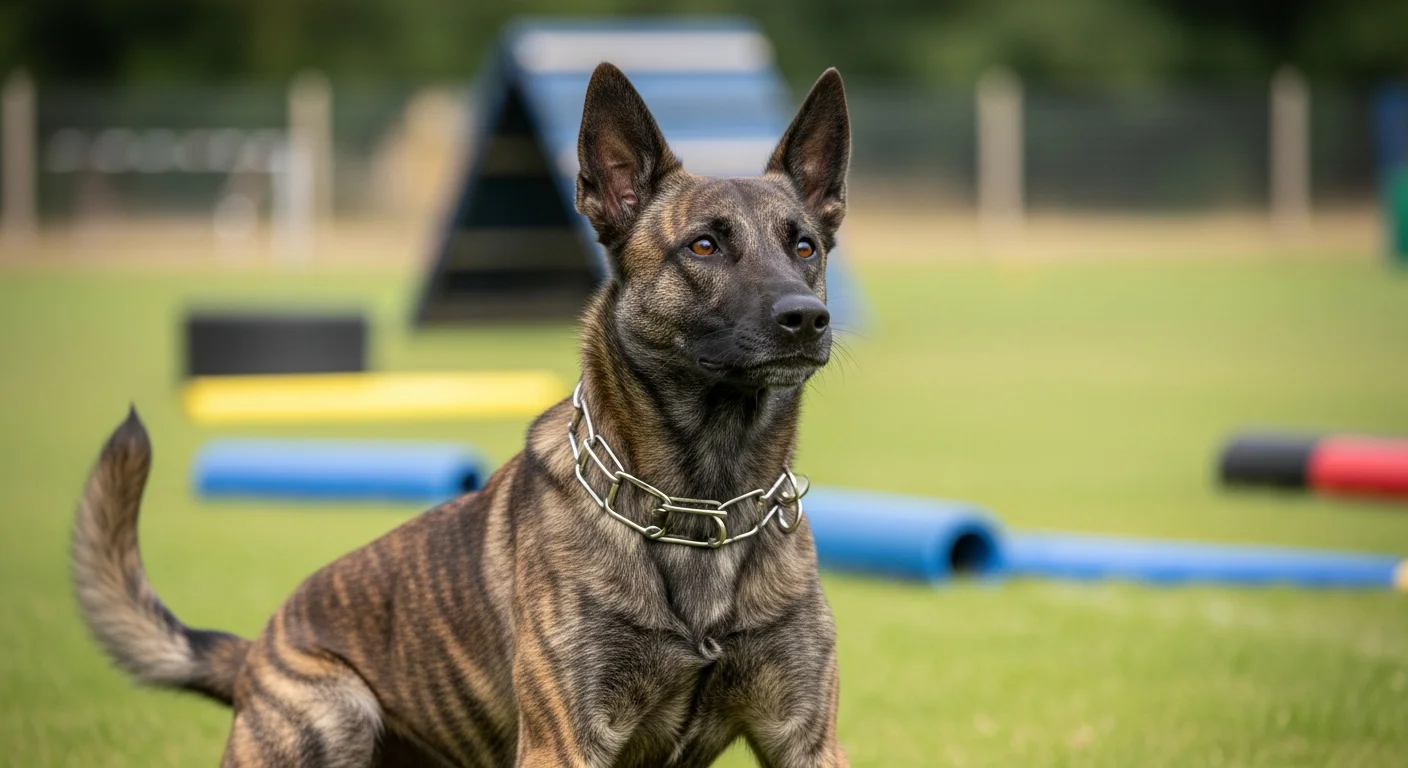
What the KNPV System Requires
The Koninklijke Nederlandse Politiehond Vereniging functions as a breeding and titling organization for police dog sports in the Netherlands. Its titles — primarily PH1 (Politiehond 1) and PH2 — are among the most demanding working evaluations in the world. The KNPV program tests a range of skills that map directly to real police work: criminal apprehension including bite work on unprotected areas, object guard, search work, and obedience under genuine environmental pressure.
Dogs that earn KNPV titles have been systematically evaluated for drive intensity, nerve strength, bite quality, trainability, and physical capability across multiple demanding exercises. The pass rate is not artificially inflated: KNPV requires actual performance, and dogs that cannot perform do not pass regardless of their ancestry or their handler's persistence. The title means what it says.
Breeding within the KNPV community has historically been organized around performance. Sires with exceptional KNPV records attract breeding interest. Dams with demonstrated working capacity are bred to sires that complement their performance profile. The market for KNPV-titled dogs is professional — police programs and serious sport competitors — which means the buyers are expert evaluators who cannot be sold underperforming dogs on the basis of impressive pedigrees.
The Dutch Shepherd Brindle: Function in a Coat
The Dutch Shepherd's brindle coat — the characteristic tiger-striped pattern that distinguishes it from German Shepherds and Belgian Shepherds — is sometimes treated as the breed's defining characteristic. This misses the point. The coat is a consequence of the breed's geographic and historical isolation from show breeding trends, not its important characteristic. The important characteristic is the working profile that isolation preserved.
Dutch Shepherd working dogs selected under KNPV pressure tend to show a specific behavioral profile: high prey drive with excellent targeting precision, strong hunt drive suitable for prolonged search work, controlled handler focus that allows reliable off-leash work in distracting environments, physical endurance significantly exceeding that of many show-bred working breeds, and nerve strength that maintains functional performance under the pressure of real apprehension scenarios.
These traits exist in the Dutch Shepherd population because they were selected for, directly and consistently, in every generation. A Dutch Shepherd that lacked these traits could not pass KNPV evaluations. Dogs that could not pass did not attract breeding interest from the working community. Over decades of this selection pressure, the population became increasingly reliable for working performance.
Comparison with the Belgian Malinois
The Belgian Malinois and the Dutch Shepherd occupy similar niches in professional working dog programs, and their comparison illuminates how different breeding communities preserve or erode working capacity differently. Both breeds have been used extensively in police and military work. Both have been subject to increasing popularity pressure in recent years. Both have experienced the consequences of that popularity in different ways.
The Malinois population is larger and more varied than the Dutch Shepherd population. Belgian and Dutch working line Malinois bred under strict working requirements remain exceptional working animals. But the Malinois's higher profile has attracted more show breeding interest, and in some countries, show-line Malinois exist that differ from working lines in the same ways show and working lines differ in other breeds. The Dutch Shepherd, with a smaller and more coherent working community, has been somewhat more protected from this bifurcation simply because show breeding interest in the breed has been lower.
The comparative standards of Malinois and Dutch Shepherds show how both breeds have been defined by their working communities in ways that have preserved what show-only breeding would have eroded. The difference in popularity has created different risks: the Malinois faces greater pressure from show breeding interest, while the Dutch Shepherd faces growing pressure as its reputation in working programs drives demand that may eventually attract show breeding attention.
"What we feared about popularity has started happening. Breeders who never trained a police dog are now advertising Dutch Shepherd litters because the name sells. In five years, ten years, we will see the consequences. We already see early signs in some lines — dogs with the look but not the substance."
The Raad van Beheer and Conformation Standards
The Raad van Beheer is the Netherlands' FCI-affiliated kennel club, which maintains conformation standards and registration for Dutch Shepherds alongside the KNPV's working community. The two systems have historically coexisted with limited overlap: conformation breeding and KNPV working breeding have been largely separate communities with different goals and different buyers.
This separation has been relatively benign for the Dutch Shepherd's working capacity, because the working community has maintained genuine selection pressure independently of kennel club requirements. But it also means there is no systemic integration of working evaluation into conformation breeding the way the German SV system integrates IGP requirements into German Shepherd conformation breeding. As conformation interest in the breed grows, the question of whether working requirements will be integrated into registration — or whether the breed will follow the split population trajectory of other working breeds — becomes increasingly relevant.
Health in the Dutch Shepherd Population
The Dutch Shepherd's relative genetic diversity, maintained partly through its small and somewhat closed working community's selective pressures and partly through the breed's lower popularity reducing founder effect concentration, has contributed to a health profile that compares favorably with more popular working breeds. Hip dysplasia exists in the population but is less prevalent than in comparable working breeds. Some heritable conditions common in German Shepherds — degenerative myelopathy, exocrine pancreatic insufficiency — are less frequent in Dutch Shepherds.
Health maintenance in the Dutch Shepherd working community has been informal rather than systematically regulated. Working dog breeders select against health problems because a working dog that develops physical problems at three years represents an operational and financial loss. This market pressure has reinforced health selection independently of formal health testing requirements. The FCI framework's health testing requirements provide a floor, but working community market pressure has functioned as a ceiling — driving selection toward genuinely healthy, sound animals that can perform for a full working career.
What the Dutch Shepherd Teaches About Breed Preservation
The Dutch Shepherd's trajectory offers a different lesson than the typical working breed story. Most working breed narratives describe a breed that was functional, attracted show breeding interest, developed a split population, and experienced working ability decline in show lines. The Dutch Shepherd narrative describes a breed that avoided this trajectory — not through proactive breed club policy, but through the relatively negative circumstance of insufficient popularity to attract show breeding pressure.
The lesson is uncomfortable because it suggests that obscurity may be protective in ways that responsible breed management should replicate through deliberate policy rather than relying on insufficient market interest. A working breed maintained by a small, demanding, performance-oriented community retains working capacity that a popular breed maintained by a large, diverse, show-oriented community loses. The Dutch Shepherd did not stay functional because its breed club was wise. It stayed functional because not enough people wanted it for non-working reasons.
This is precisely why mandatory working requirements matter in popular breeds. The German SV's IGP requirements for German Shepherd breeding, the ADRK's comprehensive requirements for Rottweilers, the systems described in our analysis of European breed warden systems — these represent deliberate institutional attempts to replicate through policy what the Dutch Shepherd achieved through obscurity. The policy approach is harder to maintain but is the only available option once a breed has become popular enough that market obscurity cannot protect it.