
The Decline of Working Titles: How Kennel Clubs Dropped Performance Requirements
There was a time when the phrase "breeding stock" carried operational meaning. A German Shepherd could not be bred under SV rules without an IGP title. A Vizsla in Hungary needed a field trial qualification. A Bouvier des Flandres in Belgium required a working certificate before producing registered offspring. The working title was not a trophy on a shelf. It was a gate that kept non-functional animals out of the breeding population. Over the past fifty years, that gate has been removed in most registries, lowered in others, and in a few holdout systems, defended with decreasing conviction.
The consequences are not theoretical. They are visible in every show ring, audible in every training field, and measurable in every temperament evaluation. Breeds that once required working demonstrations before breeding have lost the working capacity those demonstrations preserved. The loss did not happen in a single generation. It happened gradually, one policy change at a time, each justified by reasonable-sounding arguments that obscured what was actually being sacrificed.
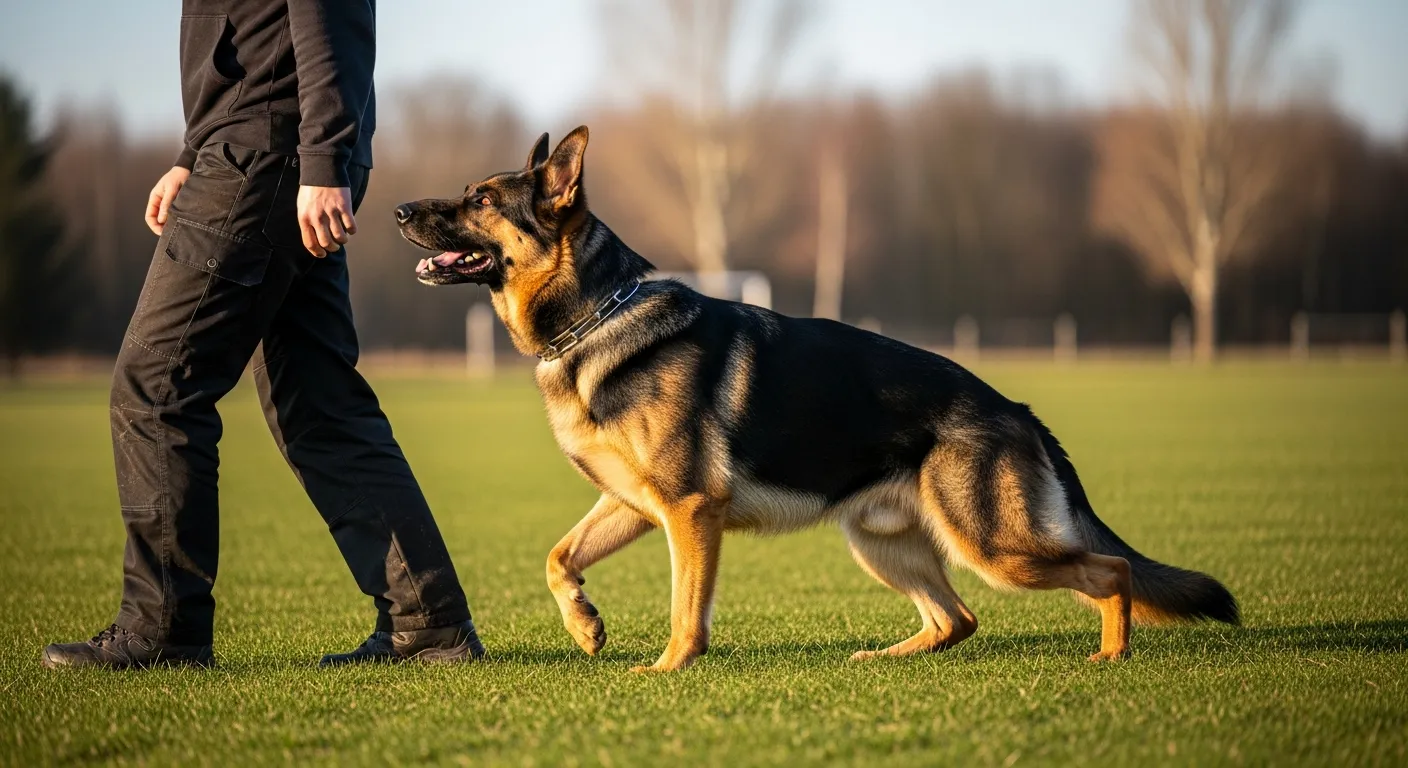
What Working Titles Actually Protected
Working titles were never primarily about the individual dog that earned them. Their real function was population-level quality control. When every dog in a breeding population must demonstrate working capacity, the population maintains working capacity. When the requirement is removed, working capacity becomes optional, and optional traits erode.
The mechanism is straightforward. A working title requirement ensures that dogs incapable of performing—those lacking drive, nerve strength, physical endurance, or trainability—are excluded from breeding. Not because someone decided they were poor specimens, but because they could not pass a functional test. The test does not care about politics, kennel blindness, or a dog's pedigree. It measures performance. Dogs that cannot perform do not pass. Dogs that do not pass do not breed. The requirement is impersonal, consistent, and effective.
Consider what an IGP title (formerly Schutzhund/IPO) actually evaluates: tracking ability, obedience under pressure, and protection work that reveals courage, grip quality, and stress tolerance. A dog that earns an IGP1 has demonstrated that its nervous system functions under real pressure. It can track a scent trail with focus and persistence. It can perform obedience exercises amid the stimulation of a protection scenario. It can engage a decoy with commitment and control. These are not arbitrary party tricks. They are functional demonstrations that the dog's genetics have produced a working animal.
When you remove that requirement, dogs that cannot track, that shut down under pressure, that lack the nerve to engage a decoy—these dogs can now breed. Their puppies inherit whatever genetic deficits prevented the parents from performing. Within a few generations, the percentage of the population capable of passing a working title drops. Within a few more generations, it drops further. The decline is not linear. It accelerates as non-working animals become the majority of the breeding population and their traits dominate the gene pool.
The Historical Erosion
The removal of working title requirements did not happen through a single dramatic decision. It happened through a series of incremental policy changes, each removing one more brick from the wall that separated breeding stock from pet stock.
In the AKC system, working title requirements never existed for most breeds. AKC registration has always been based on parentage, not performance. If both parents are registered, the puppies are registerable regardless of whether either parent has demonstrated any working ability whatsoever. This has been AKC policy since its founding, and it reflects the fundamental AKC philosophy that registration is a record of pedigree, not a certification of quality.
The FCI system historically held a different position. Many FCI member clubs required working titles for breeds classified in working groups. The German SV required Schutzhund titles. The French Ring Sport system required comparable demonstrations. Belgian, Dutch, and Scandinavian clubs maintained breed-specific working requirements for their national breeds. These requirements were the norm in continental Europe through the mid-twentieth century.
The erosion began in the 1970s and 1980s as the show dog community grew in influence within breed clubs. Show breeders, who bred primarily for conformation, lobbied for relaxed working requirements. Their argument was practical: requiring working titles from conformation-focused breeding programs was unfair because their dogs were bred for structure, not performance. The circular logic of this argument—we bred away working ability, so working tests are unfair—was rarely challenged directly.
Country by country, club by club, the requirements were softened. Some eliminated working title mandates entirely. Others replaced mandatory titles with voluntary ones. Some created alternative "character tests" that bore little resemblance to actual working evaluations but satisfied the letter of regulations that once demanded real performance. The direction was consistent: less testing, lower standards, broader access to breeding for dogs that could not work.
"We did not wake up one morning and decide to stop testing. We compromised. First it was 'titles preferred but not required.' Then 'any title counts, even the easy ones.' Then the testing infrastructure itself collapsed because not enough breeders were participating to maintain it. You cannot run a Schutzhund club when only three people in the region still train."
The Breeds That Lost the Most
Not all breeds were equally affected by the removal of working requirements. The breeds that lost the most were those where working ability was already under pressure from show breeding and where the working title requirement was the last defense maintaining functional genetics in the show population.
The German Shepherd Dog provides the most documented case study. In countries where IGP requirements were maintained, working-line German Shepherds remain functional working animals. In countries where requirements were dropped or never existed, show-line German Shepherds have diverged so dramatically from working capacity that they are effectively a different breed. The working line versus show line divide is directly attributable to the presence or absence of working title requirements in the breeding population.
The Doberman Pinscher shows a similar pattern. European Dobermans from countries maintaining working requirements retain the nerve strength, drive, and physical capacity their breed was created for. American Dobermans, bred for decades without working requirements, have become softer in temperament, less driven, and more prone to anxiety-related behavioral problems. The breed that was once considered among the most capable personal protection dogs now frequently appears on lists of breeds prone to fear-based aggression—a direct inversion of the temperament the working title was designed to verify.
The Rottweiler, the Giant Schnauzer, the Bouvier des Flandres, the Airedale Terrier—each tells a version of the same story. Where working requirements persisted, working ability persisted. Where requirements were dropped, ability eroded. The correlation is so consistent across breeds and countries that it functions as a natural experiment in breeding policy: remove the working requirement and watch working capacity decline.
The Arguments That Justified Removal
The arguments used to justify removing working title requirements deserve examination because they continue to be deployed whenever someone proposes reinstating performance standards.
The most common argument is accessibility. Working title training requires specialized facilities, qualified helpers, and experienced trainers. Not every breeder has access to these resources. Requiring working titles, the argument goes, unfairly penalizes breeders in areas without training infrastructure. This argument treats working title requirements as obstacles rather than as quality standards. By the same logic, requiring health testing unfairly penalizes breeders far from veterinary specialists. The response to inaccessibility should be building more infrastructure, not lowering standards.
The safety argument claims that working title evaluations—particularly protection phases—are inherently dangerous and encourage aggressive behavior. This argument fundamentally misunderstands what protection work evaluates. A properly trained protection dog is not aggressive. It is controlled, confident, and capable of engaging on command and disengaging on command. The protection phase tests courage and nerve, not aggression. Dogs that are truly aggressive typically fail because they cannot be controlled. The safety argument conflates controlled working behavior with uncontrolled aggression.
The relevance argument posits that working titles test abilities no longer relevant to modern dog ownership. Most dogs are companions, not working animals. Why require working demonstrations from dogs that will never work? This argument misses the point entirely. Working title requirements do not exist to prepare individual dogs for careers. They exist to maintain the genetic traits—drive, nerve strength, trainability, physical endurance—that define the breed. A breed that cannot perform its original function is no longer that breed in any meaningful sense, regardless of what it looks like.
The fairness argument suggests that requiring working titles disadvantages show breeders whose dogs were selected for conformation rather than performance. This is the most revealing argument because it explicitly acknowledges that show breeding and working ability have diverged. The proposed solution—remove the working requirement—simply accelerates the divergence. A more honest response would be to breed dogs that can both conform to the standard and perform, which is exactly what the best European breeders continue to do.
What Replacement Tests Actually Test
When working title requirements were removed, some breed clubs attempted compromise by introducing alternative evaluations. These replacements typically carry names suggesting rigor—"temperament test," "breed character evaluation," "aptitude assessment"—while testing far less than the working titles they replaced.
A typical replacement temperament test involves walking a dog through a series of novel stimuli: strange surfaces, sudden noises, approaching strangers, the presence of other dogs. The dog is assessed for appropriate reactions. Dogs that do not panic, that recover from startle, and that show social confidence pass. The test takes perhaps fifteen minutes. It requires no training, no conditioning, and no demonstration of working drives.
Compare this to an IGP1 evaluation, which requires months of training and tests tracking, obedience under distraction, and protection work including a courage test. Or compare it to a formal herding instinct test, which evaluates whether a dog possesses the genetic behavioral repertoire to control livestock. The replacement tests measure the bare minimum of functional temperament—essentially confirming the dog is not pathologically fearful or aggressive—while the working titles they replaced measured actual working capacity.
The replacement tests also suffer from pass rates that reveal their inadequacy. When 95% of dogs pass a temperament test, the test is not discriminating between working and non-working animals. It is confirming that most dogs are not dangerously unstable, which is a different and far lower standard. Working title pass rates historically ranged from 50% to 70%, reflecting genuine discrimination between dogs that could perform and dogs that could not. A test that nearly everyone passes protects nothing.
The Herding Breeds: A Parallel Crisis
The decline of working titles is not limited to protection breeds. Herding breeds have experienced an equivalent erosion of performance requirements, with equally predictable consequences.
Many herding breeds were historically required to demonstrate herding instinct or earn herding titles before breeding. These requirements ensured that the complex behavioral package necessary for herding—eye, balance, pace, power, biddability—remained in the breeding population. Herding behavior is polygenic and difficult to restore once lost. Unlike physical traits that can be selected back in a few generations, the herding behavioral complex requires multiple interacting genetic components to be present simultaneously.
When herding requirements were removed, show breeders selected for physical traits without regard to herding ability. Within a few generations, the percentage of dogs in show populations capable of passing a basic herding instinct test dropped dramatically. Some show-bred herding dogs show no herding behavior whatsoever—no eye, no gathering instinct, no interest in livestock. They are herding dogs that cannot herd. Organizations that maintain structured herding instinct evaluations consistently report lower pass rates among show-bred dogs compared to working-bred animals, confirming what breeders on both sides of the divide already know.
The Border Collie case is instructive. Working Border Collie registries—primarily the International Sheep Dog Society (ISDS)—never adopted conformation standards and maintained that breeding eligibility required demonstrated herding ability. AKC recognized the Border Collie for conformation in 1995 over strenuous objections from the working community. Within two decades, the AKC show Border Collie population had diverged sufficiently from the working population that transfers between the two were rare. The working community's prediction—that conformation breeding without working requirements would destroy herding ability—proved accurate.
Systems That Still Require Titles
A handful of breed clubs and national systems have maintained working title requirements despite pressure to conform to the permissive international norm. These holdout systems provide evidence of what working requirements preserve.
The German SV continues to require IGP titles for German Shepherd breeding certification, though the requirements have been modified over time. Dogs must earn at least an IGP1 and pass a breed survey (Korung) that evaluates both conformation and working capacity. This requirement keeps working-capable dogs in the show breeding population, maintaining a baseline of functional genetics that purely show-focused systems lack.
The Royal Dutch Police Dog Association (KNPV) maintains working requirements for Dutch Shepherds and Belgian Malinois bred under its system. KNPV titles test real-world police dog skills including criminal apprehension, object search, and handler protection. The dogs produced under this system are among the most capable working dogs in the world, and they are produced consistently because the system will not register offspring from dogs that cannot perform.
Several Scandinavian breed clubs maintain working requirements adapted to their breeds. Swedish and Finnish breed clubs require working evaluations for breeds in working groups, including mental descriptions (MH tests) that evaluate behavioral traits systematically. While these tests are less demanding than full working titles, they represent meaningful discrimination between functional and non-functional temperaments.
The Czech Republic maintains working requirements for several national breeds, including the Czechoslovakian Vlcak, which must pass endurance and working evaluations before breeding. The breed's wolf-dog heritage makes working capacity both a functional requirement and a safety imperative—a Vlcak without proper working temperament is a liability rather than a companion.
What these systems share is a refusal to separate registration from function. Dogs are not registered on pedigree alone. They must demonstrate that their genetics have produced a functional animal. This requirement keeps functional genetics in the breeding population generation after generation, which is exactly what it was designed to do.
Can Working Requirements Be Restored?
The most pressing question is whether working title requirements, once removed, can be restored. The answer is theoretically yes but practically difficult, and the difficulty increases with every generation that passes without selection pressure for working ability.
The political obstacles are formidable. Breeders who have built programs without working requirements will resist their imposition. Show breeders whose dogs cannot earn working titles will view reinstatement as an attack on their breeding programs. The show community typically outnumbers the working community within breed clubs, giving them the voting power to block changes. This dynamic is why requirements, once removed, are almost never restored through internal club politics.
The genetic obstacles are equally serious. In breeds where working requirements have been absent for many generations, the percentage of the population capable of earning a working title may be vanishingly small. Reinstating a requirement that most of the breed cannot meet would either cripple the breeding population or require such generous grandfathering provisions that the requirement would be meaningless for a generation or more.
The infrastructure obstacle is practical. Working title training and evaluation require facilities, qualified helpers, experienced trainers, and licensed judges. In regions where working title activity has declined, this infrastructure has deteriorated or disappeared. Rebuilding it requires investment, organization, and participants—all of which are scarce when the breeding community has moved away from working evaluations.
Despite these obstacles, some breed communities are attempting restoration. Parent clubs in several countries have introduced voluntary working requirements that provide breeding advantages—priority stud listings, premium registration categories, or endorsements—without making working titles mandatory. These partial measures maintain working genetics within populations that participate while avoiding the political confrontation of mandatory requirements. Whether they can maintain population-level working capacity without mandatory participation remains an open question.
"Restoring what was lost is always harder than preserving what you have. We spent decades dismantling working requirements to make breeding convenient. Now we face the consequence: breeds that look correct but cannot function. Rebuilding function into those populations will take longer and cost more than maintaining it would have."
The Uncomfortable Conclusion
The evidence from fifty years of natural experiment across dozens of breeds and multiple countries supports one conclusion: working title requirements preserve working ability, and their removal causes working ability to decline. No alternative mechanism has proven equally effective. Replacement tests are too easy. Voluntary participation captures too few breeders. Education and encouragement change attitudes but not gene pools.
The decline of working titles is not a historical curiosity. It is an ongoing process. Breeds that currently maintain requirements face pressure to relax them. Breed clubs that have held firm for decades find their working communities shrinking as show populations grow. The economic incentives favor show breeding, where success is measured in ribbons rather than functional performance. The trajectory, absent deliberate intervention, points toward further erosion.
For anyone who values breeds as functional animals rather than aesthetic objects, the lesson is clear. Working title requirements are the single most effective tool for maintaining working capacity in a breeding population. Every breed that has abandoned them has lost working ability. Every breed that has maintained them has preserved it. The mechanism is simple, the evidence is overwhelming, and the choice is binary: require performance or watch it disappear.
The working title was never just a title. It was the last honest thing in a breeding system increasingly dominated by appearance, politics, and convenience. Removing it did not make breeding better. It made breeds worse. The dogs know it. The question is whether the breed clubs will admit it before there is nothing left to preserve.